| Course | |||||
|---|---|---|---|---|---|
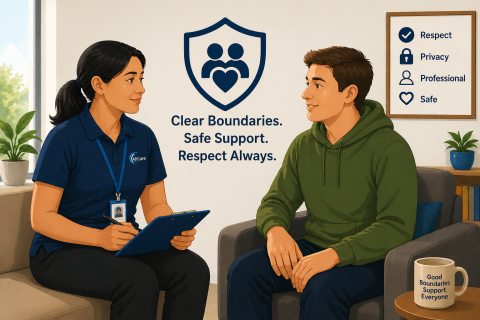 | L1_NDIS Ignite: Frontline Fundamentals Clear boundaries are what turn good intentions into safe, professional practice.After this lesson, you will:
| ||||
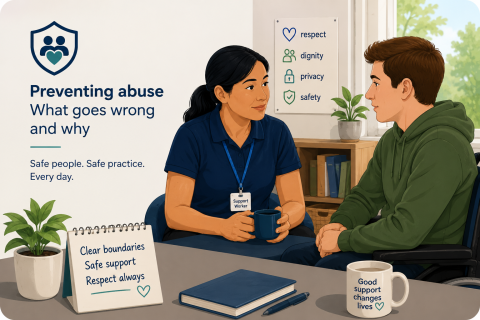 | L1_NDIS Ignite: Frontline Fundamentals Small warning signs become serious harm when nobody acts.After this lesson, you will be able to:
| ||||
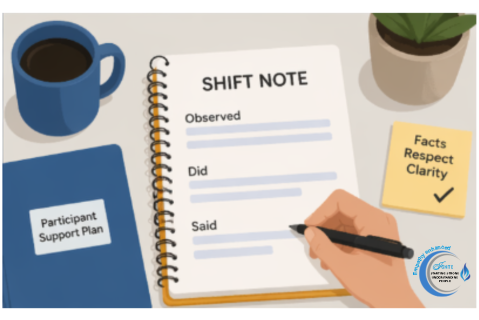 | L1_NDIS Ignite: Frontline Fundamentals What you write today becomes the support someone relies on tomorrow.After this lesson, you will:
| ||||
 | A$49.95 L1_NDIS Ignite: Frontline Fundamentals Positive Behaviour Support isn't about changing people, it's about changing the conditions around people so they have the best opportunity to succeed. Every behaviour happens for a reason. Every interaction is an opportunity to build skills,... | ||||
 | A$49.95 L1_NDIS Ignite: Frontline Fundamentals Section 9 of the NDIS Act 2013 defines a restrictive practice as ‘any practice or intervention that has the effect of restricting the rights or freedom of movement of a person with disability’. By the end of this online module and face to face... | ||||
 | L1_NDIS Ignite: Frontline Fundamentals Rapport. How safety feels.After this lesson, you will:
This is a skill,... | ||||
 | L1_NDIS Ignite: Frontline Fundamentals This micro-learning course helps frontline disability support workers understand what empathy really is and how to use it in everyday NDIS support. The course highlights how empathy improves safety, trust, and quality of life for people with... | ||||
 | L1_NDIS Ignite: Frontline Fundamentals How cultural respect and safety is experienced.After this lesson, you will:
| ||||
 | L1_NDIS Ignite: Frontline Fundamentals Supported decision making is an approach that enables individuals, particularly those with disabilities, to make their own decisions with the assistance of others. | ||||
 | A$19.00 L1_NDIS Ignite: Frontline Fundamentals The purpose of this module is to remind you that your role is not just a job. It’s about supporting real people to live real lives, have goals and dreams, and be treated with dignity. This isn't the type of job where a bad day doesn't really... |


 Log in with Facebook
  Log in with Google
  Log in with LinkedIn